You’re considering a Chow Chow. You love the fluffy lion-like look. Then someone mentions shedding, and suddenly you’re wondering: how bad is it, really?
The answer from Brooklyn Pet Spa’s staff? Pretty bad — but manageable.
Table of Contents
ToggleKey Takeaways
- Yes, Chow Chows shed heavily — they’re moderate shedders year-round, with two massive “coat blow” periods in spring and fall
- Their double coat is the culprit — soft undercoat for insulation, thick outer coat for protection; when they shed, it comes out in tufts
- Daily brushing during shedding season is non-negotiable — a slicker brush and undercoat rake can prevent fur from taking over your house
- Never shave them — it damages the coat, exposes sensitive skin, and actually makes them hotter, not cooler
- Professional grooming every 8-12 weeks helps — especially before and during spring/fall coat blows
Shedding Seasons: What to Expect
| Time of Year | Shedding Level | What’s Happening | Your Action Plan |
| Year-round | Moderate | Constant undercoat loss, normal cycle | Brush 2-3 times per week |
| Spring (coat blow) | Heavy | Shedding undercoat to prepare for warm weather | Brush daily and consider professional deshedding |
| Summer | Light to moderate | Minimal shedding after spring cycle | Resume 2-3 times per week |
| Fall (coat blow) | Heavy | Shedding out thin coat, growing in winter undercoat | Brush daily, do weekly baths with deshedding shampoo |
| Winter | Light | Minimal shedding; coat is full and protective | Brush 2-3 times per week and watch for dry skin |
The Science Behind the Shed
Chow Chows have a double coat — two distinct layers working together. The soft undercoat sits close to the skin and provides insulation. The thick outer coat (called guard hairs) sits on top and protects them from the elements.
This double coat is brilliant for temperature regulation. In summer, it traps air between the layers, keeping them cool. In winter, it provides serious insulation. But here’s the catch: when they prepare for seasonal changes, they shed that undercoat completely. And when we say “completely,” we mean tufts of hair that look like small tumbleweeds rolling across your living room floor.
This shedding happens twice a year — spring and fall — and it’s called “blowing their coat.” You’ll see it happen suddenly. One week they look fine. The next week you brush them and pull out what feels like an entire second dog’s worth of fur. This is normal. It’s also loud and dramatic.
Between these coat blows, Chow Chows shed moderately year-round. Nothing crazy, but noticeable. Add in the spring and fall explosions, and you’re looking at a dog that requires serious commitment to grooming.
Why Your Chow Sheds (And Why You Can’t Stop It)
You can’t stop shedding. It’s not a disease. It’s not poor diet or stress. It’s genetics. Chow Chows were bred in cold climates where this double coat was essential. That means the shedding is built in.
What you can do is manage it. Regular brushing removes loose hair before it ends up on your couch. Weekly baths during shedding season help facilitate the process — it’s like actively removing the loose undercoat instead of waiting for it to fall out naturally over weeks.
Some owners panic and consider shaving. Don’t. Please.
Shaving a Chow Chow is one of the worst things you can do for them. When you shave the coat, you remove both layers. What grows back? The soft, thin undercoat comes back first, leaving them without the protective outer coat. This means they’re actually hotter in summer (the whole reason people shave), and their sensitive skin is completely exposed to sun and elements. There are documented cases of the outer coat never growing back properly.
The double coat is there for a reason. Work with it, not against it.
The Grooming Reality Check
Let’s be honest about what you’re committing to.
Regular season (summer and winter): Brush your Chow at least 2-3 times per week. Spend 10-15 minutes per session. Use a slicker brush for the topcoat and a metal comb to work through any tangles. This prevents mats and keeps loose hair manageable.
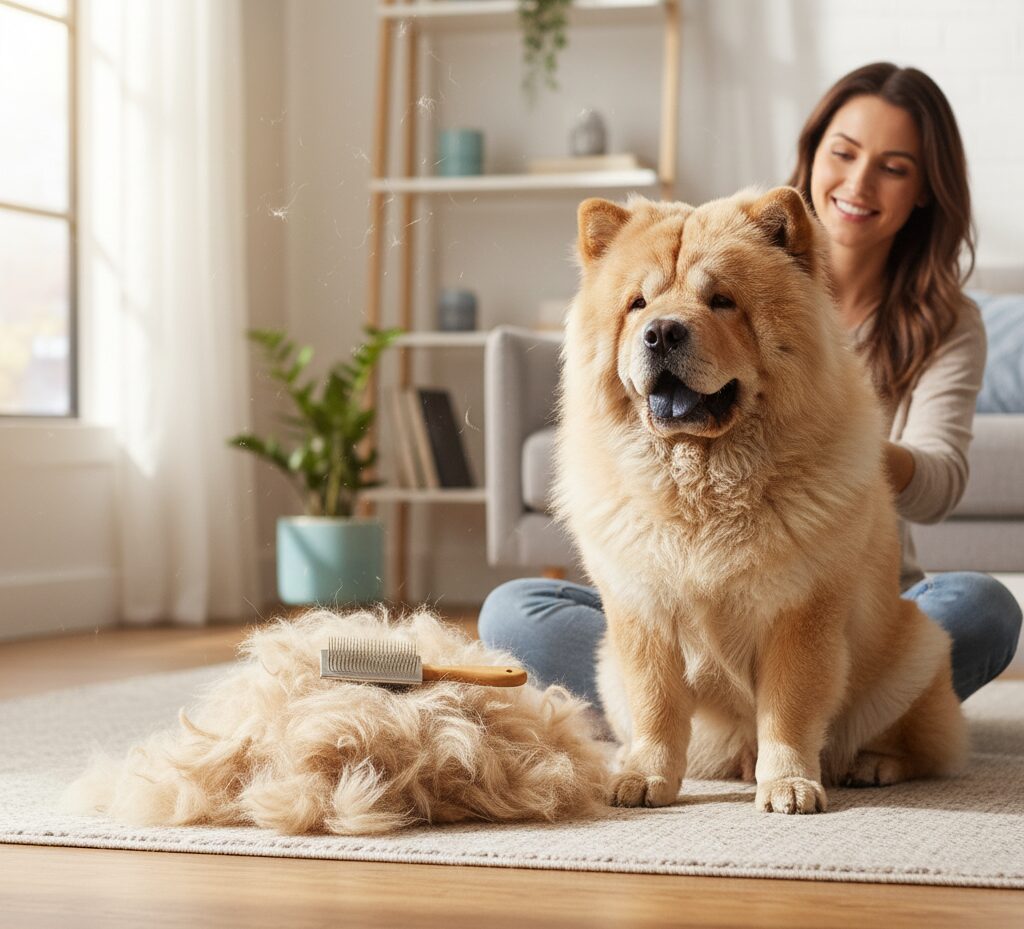
Shedding season (spring and fall): Brush daily. Seriously. This is when you grab an undercoat rake or shedding blade and pull out the loose undercoat before it falls out naturally. You’ll be shocked how much comes out. A high-velocity dryer after a bath helps too — it forces out loose undercoat that brushing alone misses.
Bathing: Every 4-6 weeks is standard. During heavy shedding season, you can bathe weekly if you want to speed up the process. Use a dog-formulated shampoo and conditioner (their sensitive skin demands it), and dry thoroughly. Incomplete drying can lead to hot spots or fungal issues.
Professional grooming: Every 8-12 weeks. More frequently during spring and fall. A professional groomer has the tools and experience to remove undercoat efficiently. They’ll also trim around the face, ears, and paws — areas that mat quickly and are hard to reach at home.
Between Grooming Sessions
Maintenance between professional visits matters. Chow Chows are prone to matting, especially around the ears, mane, and tail. A mat can form in days if you’re not paying attention.
Brush gently. Start at the skin and work outward. Use a detangling spray if you hit a tangle — never yank. Never dry brush. Always spray the coat lightly with water first.
Watch their ears closely. Long, thick hair around the ear canal traps moisture and bacteria. Clean ears weekly with a veterinarian-approved solution. Same goes for the area under their tail.
Trim around the paw pads if hair is getting long. This prevents dirt and debris from getting stuck, plus it helps them grip floors better.
A healthy coat starts with a healthy diet. Make sure your Chow is getting enough omega-3 and omega-6 fatty acids. Ask your vet about food supplements if you’re concerned about skin health.
What Happens If You Skip the Grooming
We get it. Life gets busy. Maybe you think you’ll deal with it “when it gets bad.”
Here’s what happens: mats form. They pull on the skin and cause discomfort. Your Chow scratches at them, creating open wounds. Those wounds get infected. Skin infections are expensive and painful to treat. You end up at the vet anyway, paying more money for a medical issue that could have been prevented with 10 minutes of brushing a week.
Chow Chows already have sensitive skin. They’re prone to yeast infections, dry skin, and hot spots. Regular grooming lets you catch these issues early. When you’re brushing daily during shedding season, you notice things. Red patches. Unusual flaking. Lumps. Early detection saves money and suffering.
FAQ: Chow Chow Shedding
How much do Chow Chows actually shed compared to other double-coated breeds?
Chow Chows are heavy shedders. Similar to German Shepherds and Huskies. If you’re familiar with those breeds, you have an idea of the volume. Spring and fall coat blows are particularly intense — we’re talking more fur than you’d think possible.
Can I reduce shedding with diet changes?
Partially. A high-quality diet with omega-3 and omega-6 fatty acids supports coat health, which can reduce excessive shedding caused by poor skin. But seasonal shedding? That’s happening regardless. You can’t diet your way out of a natural coat cycle.
Is there a “best” tool for Chow Chow shedding?
For regular maintenance: a long-bristled slicker brush and a metal comb. During heavy shedding: add an undercoat rake or shedding blade. Don’t use a furminator or deshedding tool aggressively — it can damage the outer coat. Gentle and consistent beats aggressive and occasional.
How often do I really need professional grooming?
Every 8-12 weeks minimum. More often during spring and fall (maybe every 6 weeks). A professional has industrial-grade tools and technique that home grooming can’t replicate. They also handle difficult areas and do a full de-shedding treatment that makes a real difference.
My Chow Chow has bad shedding. Should I worry it’s a health issue?
Normal shedding is predictable and seasonal. If your dog is shedding in weird patches, or if shedding is happening way out of season, or if the skin looks inflamed, talk to your vet. Most extreme shedding is just the breed being the breed. But unusual patterns warrant a professional opinion.
The Reality of Chow Chow Ownership
Chow Chows are magnificent dogs. They’re loyal, independent, and genuinely beautiful. But that coat demands respect and commitment.
If you’re the type of person who vacuums once a week, this breed isn’t for you. If you’re someone who forgets appointments and thinks “I’ll bathe them when they need it,” don’t get a Chow Chow. But if you genuinely enjoy grooming, or you’re willing to invest in professional help, and you understand that shedding is part of the package — then you’ll love having one.Ready to commit? Come see us at Brooklyn Pet Spa. We’ll set you up with a grooming schedule, show you the right tools, and make sure your Chow’s coat stays healthy and beautiful year-round.