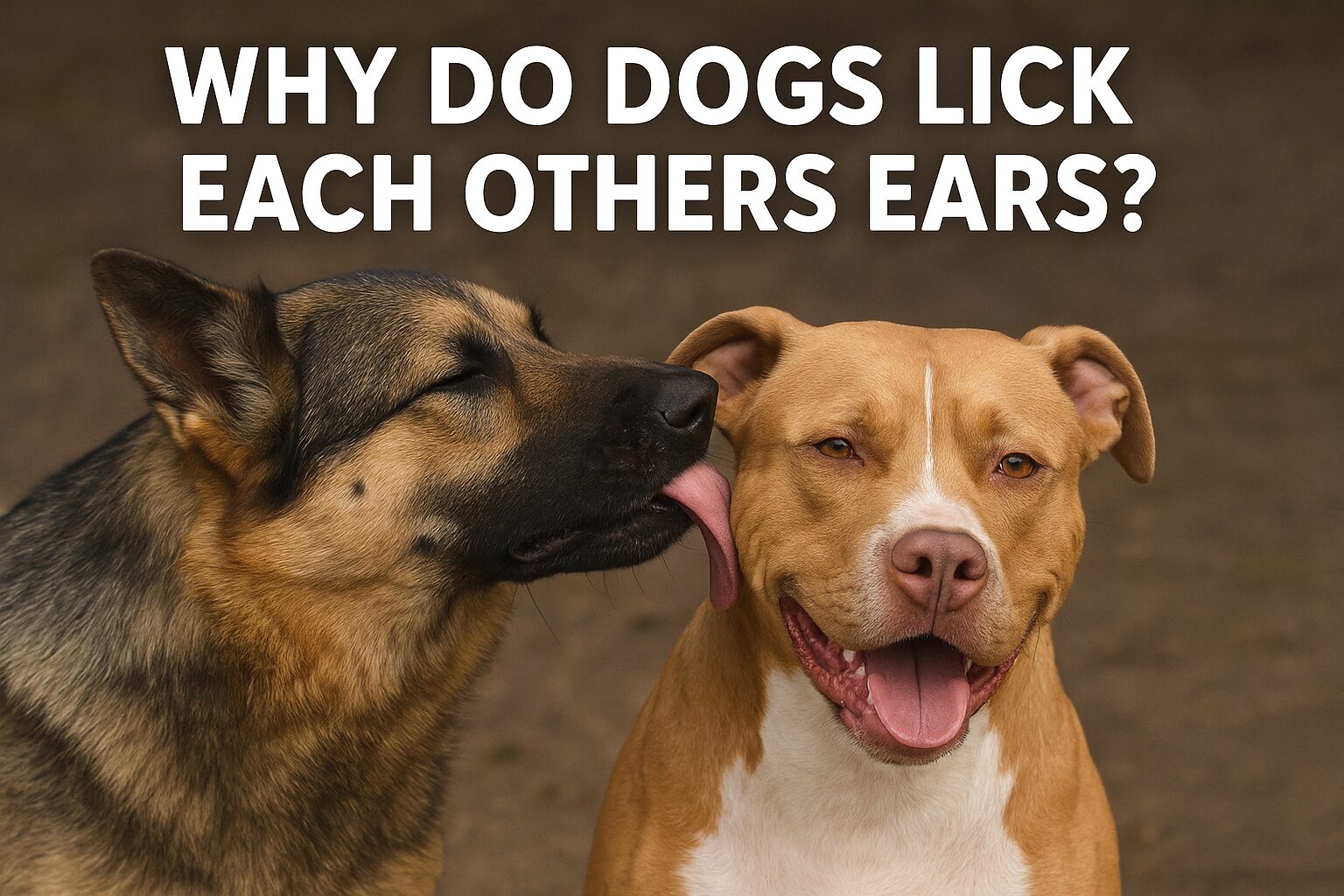
You watch your dogs play, and suddenly one is licking the other’s ear. You wonder: is this normal? Should I be concerned? Is there something wrong with that dog’s ear?
The answer is usually straightforward: it’s a natural behavior with several different reasons behind it.
Table of Contents
ToggleKey Takeaways
- Ear licking is normal pack behavior — dogs use it to bond, greet, show affection, and communicate social hierarchy
- Grooming is a legitimate reason — dogs can’t reach their own ears, so they help each other keep them clean
- It signals submission and respect — the lower-ranking dog typically licks the higher-ranking dog’s ears as a sign of deference
- Sometimes it indicates a health issue — if a dog suddenly starts excessively licking one dog’s ears, that dog might have an infection
- Excessive licking can cause problems — repetitive licking irritates skin and can lead to actual infections, so monitor the behavior
Why Dogs Lick Each Other’s Ears: The Main Reasons
| Reason | Behavior | What It Means | Is It Concerning? |
| Social Bonding | Gentle, occasional licking | “You’re part of my pack” — affection and connection | No, unless excessive |
| Grooming | Focused licking, especially inner ear | Helping clean an area the other dog can’t reach | No, this is helpful |
| Submission/Hierarchy | Lower-ranking dog licks higher-ranking dog | Acknowledging pack order and respect | No, this is natural |
| Taste Preference | Repeated, focused licking | Dog likes the taste of ear wax (salty flavor) | Potentially — can become obsessive |
| Curiosity/Exploration | Quick sniffs and licks | Gathering information about the other dog | No, just investigation |
| Stress/Anxiety Relief | Repetitive licking | Dog is self-soothing through licking behavior | Yes — indicates anxiety |
| Infection Detection | Sudden focused licking of one dog’s ears | The other dog can smell an ear infection | Yes — get the dog checked |
The Real Reasons Behind Ear Licking
Social Bonding and Pack Behavior
Dogs are pack animals. They’ve been for thousands of years, genetically speaking. Even domesticated dogs still carry those pack instincts.
In a pack, licking is a form of communication and bonding. When one dog licks another, they’re saying, “You’re part of my group. I recognize you. I care about you.” It’s like a dog’s version of a handshake or hug — it’s how they reaffirm social bonds.
Puppies learn this behavior early. Mother dogs lick their puppies to groom and show affection. Puppies watch this and continue the behavior with littermates, then with other dogs as adults. It becomes part of their social vocabulary.
Grooming: The Practical Reason
Here’s the thing: dogs can’t reach their own ears. They can scratch at them with a back leg, but they can’t effectively groom the inner ear area.
Enter another dog. When one dog licks another’s ears, they’re providing a service — keeping that area clean, removing dirt, debris, and earwax buildup. It’s practical grooming, similar to how primates groom each other by picking through fur to remove parasites and dirt.
This is especially true in multi-dog households where dogs are bonded. They’ll engage in mutual grooming naturally, including ear licking. If both dogs seem comfortable with it and it’s not obsessive, this is healthy behavior.
Submission and Hierarchy
In any dog group (whether it’s two dogs or a pack), there’s a hierarchy. Someone’s the boss. Someone’s not.
A dog typically shows submission by licking the ears of the higher-ranking dog. You can usually tell which is which by watching body language:
- The submissive dog keeps their tail down, ears back, and gives a “soft” expression
- They approach the dominant dog respectfully
- The dominant dog usually accepts the licking calmly
This behavior helps maintain pack order without fighting. It’s a peaceful way of saying, “I recognize you’re in charge. I respect that.”
The Taste Factor
Here’s the reality: ear wax smells and tastes distinctive to dogs. It’s salty. It’s got a strong scent. And some dogs are genuinely attracted to it.
Dogs experience the world through their noses first, then their mouths. The ear area offers interesting chemical information that a dog’s incredibly sensitive nose finds appealing.
If your dog is frequently licking another dog’s ears, they might just really enjoy how the ear tastes. This isn’t harmful in small amounts, but excessive licking can become a problem.
Stress and Self-Soothing
Licking releases endorphins in a dog’s brain — the same feel-good chemicals that calm humans when we’re anxious. Dogs know this instinctively.
If a dog is feeling stressed, anxious, or uncertain, they might lick another dog’s ears as a way to soothe themselves. It’s self-directed behavior that calms their nervous system.
You’ll usually notice this licking is more repetitive and compulsive than social licking. If your dog is engaging in excessive, obsessive ear licking, anxiety might be the culprit.
The Red Flag: Detecting Health Issues
This is important: if your dog suddenly starts aggressively or obsessively licking another dog’s ears, that dog might have an infection.
Dogs can smell infections that haven’t even shown symptoms yet. The discharge, odor, or yeast from an ear infection is incredibly attractive to other dogs. If a dog who doesn’t normally lick ears suddenly can’t leave another dog’s ears alone, that’s a sign the ear-receiving dog needs a vet visit.
Same goes if one dog has noticeably itchy or irritated ears. That’s potentially an infection or allergy signaling itself.
When to Intervene
Normal ear licking: Occasional, gentle, both dogs seem comfortable, happens as part of natural bonding and grooming.
Problem ear licking:
- Excessive and repetitive licking that the other dog tries to avoid
- One dog’s ears become irritated, red, or infected from the licking
- The licking seems compulsive or anxiety-driven
- The behavior increases suddenly (suggesting a health issue in the licked dog)
- One dog seems distressed by it
What to do:
- Check the ear-receiving dog for infections. Have a vet examine their ears. Look for redness, discharge, odor, or inflammation.
- Redirect the licker. If your dog is compulsively licking ears, interrupt the behavior and redirect to a toy or activity.
- Separate if needed. If one dog’s ears are getting irritated, separate the dogs when unsupervised and monitor.
- Monitor behavior. Watch for whether the licking is getting worse, better, or staying the same.
- Consider underlying anxiety. If the licking seems obsessive and stress-related, talk to your vet about whether your dog is experiencing anxiety.
FAQ: Dog Ear Licking Behavior
Is it normal for dogs to lick each other’s ears?
Yes, completely normal. It’s a natural pack behavior used for bonding, grooming, establishing hierarchy, and communication. Most dogs do it occasionally.
How much ear licking is too much?
Occasional ear licking (a few times during play or interaction) is fine. Constant, obsessive licking where the other dog is trying to avoid it is too much. Same with licking that causes irritation or redness.
What does it mean if my dog suddenly starts licking another dog’s ears?
Could mean several things: they’re bonding more, they’re establishing hierarchy, they’ve noticed something tasty or smelly about the ears, or — importantly — they’re detecting an infection or health issue. If it’s a sudden change, get the ear-receiving dog’s ears checked by a vet.
Can excessive ear licking cause an infection?
Yes. Repetitive licking irritates the skin, removes protective oils, and can create a breeding ground for bacteria and yeast. Monitor and intervene if you see redness or irritation.
My dog obsessively licks ears. What should I do?
First, rule out medical issues in both dogs. Then consider whether your dog is anxious or stressed — excessive licking is sometimes a self-soothing behavior. Redirect to toys, increase exercise, and talk to your vet or a trainer about anxiety management if needed.
The Bottom Line
Dogs lick each other’s ears for natural, usually harmless reasons: bonding, grooming, establishing hierarchy, curiosity, or taste preference. In most cases, it’s a healthy sign of pack behavior and connection.
The key is monitoring. Occasional ear licking? Normal and fine. Obsessive, compulsive, or causing irritation? Intervene. Sudden change in behavior? Get the ear-receiving dog’s ears checked.
Keep ears clean as part of a regular grooming routine, watch for infections, and let your dogs be dogs — which includes the occasional ear lick as part of their social language.
If you’re concerned about your dog’s ear health or behavior, we can help. Come see us for grooming and ear care, or book an appointment to talk through what you’re noticing with your dogs.