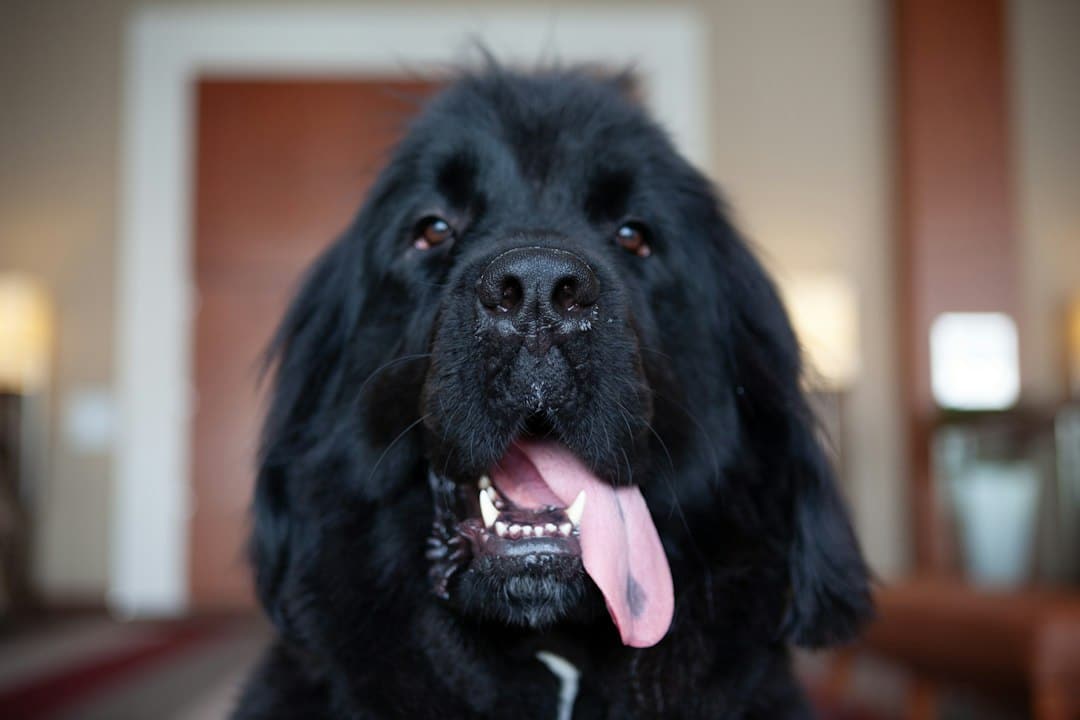
A Newfoundland in Brooklyn is hard to miss. These gentle giants can weigh well over 100 pounds, and much of what you see is coat: a thick, water-resistant double coat built for cold North Atlantic water. That coat is beautiful, but it sheds heavily, mats in hidden places, and takes hours to wash and dry properly. In a city apartment or walk-up, good Newfoundland dog grooming is what keeps your home livable and your dog comfortable. This guide covers the Newfie coat, seasonal shedding, how to prevent mats, drool and ear care, why shaving is a bad idea, and what grooming costs at Brooklyn Pet Spa.
Table of Contents
ToggleUnderstanding the Newfoundland Coat
Newfoundlands have a true double coat:
- Outer coat: Long, coarse, and slightly oily. It repels water and protects the skin from sun, cold, and dirt.
- Undercoat: Soft, dense, and woolly. It traps air to insulate the dog and is the main source of shedding and mats.
The coat is heaviest around the neck, chest, the “pants” on the back of the hind legs, and the tail. These are also the places where loose undercoat packs down and turns into mats if it is not brushed out. Newfies come in black, brown, gray, and the black-and-white Landseer pattern, and all colors share the same coat care needs.
How Much Do Newfoundlands Shed?
Quick answer: A lot. Newfoundlands shed moderately all year and then “blow” their undercoat heavily, usually in spring and fall. During a coat blow, loose fur comes out in large clumps and can cover floors, furniture, and clothing within a day.
Shedding is natural and healthy, and it cannot be stopped. What you can control is where the hair ends up. Regular brushing at home plus a professional bath, blow-out, and de-shedding treatment during heavy seasons removes the loose undercoat before it lands on your couch or forms mats. Our complete guide to dog deshedding explains how the process works.
Mat Prevention: How to Brush a Newfoundland
Plan on brushing two to three times a week, and daily during coat blows. A full brush-out on a large Newfie can take 30 minutes or more, so many owners split it into sections over a few days.
Tools You Need
- Undercoat rake: Pulls loose undercoat out from deep in the coat.
- Large slicker brush: Works through the outer coat and lifts loose hair.
- Wide-toothed metal comb: Checks for hidden tangles and finishes the job.
- Detangling or conditioning spray: Reduces breakage and makes brushing easier on a dry coat.
Line Brushing, Step by Step
- Start at the back legs and work forward toward the head.
- Part the coat with one hand so you can see the skin.
- Brush a small section from the skin outward, then move the part up an inch and repeat.
- Run the comb through each section. If it snags, go back with the rake or slicker.
- Give extra time to the mat-prone areas: behind the ears, the neck ruff, armpits, chest, belly, the “pants,” and under the tail.
Surface brushing makes a Newfie look neat while mats keep forming underneath, especially behind the ears and in the armpits. Those hidden mats pull on the skin, trap moisture, and can lead to hot spots. Never cut mats out with scissors. Large dogs often have mats tight against the skin, and accidental cuts are common. Leave stubborn mats to a professional groomer.
Bathing and Drying a Newfoundland
Newfoundlands usually need a full bath every six to eight weeks, or sooner if they roll in something or come back from a muddy day. The challenge is not the bath itself but the drying. A Newfie’s undercoat holds water like a sponge. If it is left to air-dry, especially in a cool apartment, it can stay damp close to the skin for many hours, which can lead to odor, mats, and skin irritation.
At the salon, we use high-velocity dryers that blow water and loose undercoat out of the coat at the same time. This is one of the biggest differences between a home bath and a professional groom for a giant breed. For many Brooklyn owners, simply getting a 120-pound dog into a bathtub in a walk-up is reason enough to leave bath day to us. Our tips on grooming large dogs in Brooklyn walk-ups help with the in-between care.
Should You Shave a Newfoundland?
In most cases, no. It is tempting to shave a Newfie before a hot New York summer, but the double coat actually helps insulate the dog from heat and protects the skin from sunburn. Shaving can damage how the coat grows back, sometimes leaving it patchy or uneven for a long time.
A better approach for summer is a thorough de-shedding to remove the dense undercoat, plus a neat trim of the feet, sanitary area, and any overly long feathering. Keep walks to early mornings and evenings, offer shade and plenty of water, and keep your Newfie in air conditioning on the hottest days. If a coat is so badly matted that brushing it out would be painful, a groomer may recommend a shorter clip as the kindest option and explain why before starting.
Drool, Face, and Ear Care
Drool
Newfoundlands are known for drooling, especially after drinking, eating, or exercise. Drool that dries on the lips, chin, and chest can mat the hair and cause odor or skin irritation. Keep a towel near the water bowl and the front door, and wipe your dog’s mouth and chest regularly.
Ears
Newfie ears are fairly small for their size but fold down and close to the head, which traps warmth and moisture. Check them weekly for redness, dark wax, or a sour smell. Clean only the visible part with a vet-approved cleaner, and dry them well after baths or swimming. Head shaking, scratching, or a strong smell means a vet visit.
Eyes
Some Newfoundlands have slightly loose lower eyelids that collect debris. Wipe gently around the eyes with a damp cloth and talk to your vet about any redness or discharge.
Nails and Paws
Large, heavy dogs put a lot of pressure on their feet, so nail length really matters. Overgrown nails change how a Newfie stands and walks and can put strain on the joints. Trim every three to four weeks, or whenever you hear clicking on the floor.
Newfoundlands have webbed feet with long hair between the toes. Keep that hair trimmed level with the pads. In Brooklyn winters, it collects ice balls and road salt. In fall, it picks up leaves and burrs from Prospect Park. A quick paw wipe after walks protects the skin between the toes.
How Often Does a Newfoundland Need a Groomer?
Most Newfoundlands do well with a professional groom every six to eight weeks. During spring and fall coat blows, a bath and de-shedding session every four to six weeks makes a big difference to the amount of hair at home. Senior Newfies and dogs with joint issues may also benefit from more frequent, shorter visits.
If you also share your home with another big double-coated breed, our guides to Saint Bernard grooming, Great Pyrenees grooming, and Bernese Mountain Dog grooming cover similar coats.
When to See a Professional Groomer
Book an appointment when:
- Your Newfie is blowing coat and brushing at home cannot keep up.
- You feel mats behind the ears, in the armpits, or in the “pants.”
- The coat smells musty or stays damp long after a bath or rainy walk.
- Drool has matted the hair on the chin or chest.
- Nails are clicking on the floor or the paw hair is overgrown.
- It has been more than eight weeks since the last full groom.
A full groom at Brooklyn Pet Spa includes a shampoo and conditioning, a thorough blow dry, nail clipping and filing, ear cleaning, a dental inspection, and a tidy trim. We are a cage-free salon, and we take extra care with giant breeds, including breaks for dogs who need them and keeping the dryer at a comfortable distance for nervous dogs.
Newfoundland Grooming Cost in Brooklyn
These are Brooklyn Pet Spa starting prices for Newfoundlands from our dog grooming breed rates page:
| Service | Starting price |
|---|---|
| Grooming haircut + bath package | $138+ |
| Groomer’s bath | $83+ |
| Wash N Go | $63+ |
Final pricing depends on your dog’s size, coat condition, matting, and temperament. A heavily shedding or matted coat takes more time to wash, dry, and brush out. Staying on a regular schedule is the best way to keep costs predictable. A grooming visit typically takes 2 to 4 hours, and giant breeds are usually toward the longer end.
At-Home Newfoundland Grooming Checklist
- Brush two to three times a week, daily during coat blows.
- Line brush to the skin and check with a wide-toothed comb.
- Check behind the ears, armpits, chest, and “pants” for mats.
- Wipe drool from the mouth and chest daily.
- Check and clean the ears weekly.
- Trim nails every three to four weeks and keep paw hair short.
- Book a professional groom every six to eight weeks, more often during shedding season.
Frequently Asked Questions
How often should a Newfoundland be groomed?
A professional groom every six to eight weeks works for most Newfies, with brushing at home two to three times a week. During spring and fall coat blows, a de-shedding visit every four to six weeks helps.
Do Newfoundlands shed a lot?
Yes. They shed moderately year-round and heavily during seasonal coat blows, usually in spring and fall.
Can I shave my Newfoundland for summer?
It is usually not recommended. The double coat helps regulate temperature and protects the skin. A thorough de-shedding and a neat trim are better options.
Why does my Newfoundland smell even after a bath?
The dense undercoat can stay damp for hours if it is not dried completely, which can cause a musty smell. A high-velocity dry at a groomer removes water and loose undercoat together.
Where do Newfoundlands get mats?
Most often behind the ears, in the neck ruff, armpits, chest, belly, the “pants” on the back legs, and under the tail.
How much does Newfoundland grooming cost in Brooklyn?
At Brooklyn Pet Spa, a Newfoundland grooming haircut and bath package starts at $138, a groomer’s bath at $83, and a Wash N Go at $63. Size, coat condition, and matting can affect the final price.
Ready to tame the shedding and give your gentle giant a fresh, comfortable coat? Book a grooming appointment at Brooklyn Pet Spa or call us at +1 (718) 768-0293. We are a cage-free salon serving Brooklyn since 2008.