If you’ve ever vacuumed your living room in the morning only to find another layer of fur on the couch by dinner, you already know the struggle of living with a heavy shedder. That’s exactly the problem a dog deshedding treatment is designed to solve. It’s one of the most requested services at grooming salons across the country, and for good reason — it tackles shedding at the source instead of just managing the mess it leaves behind.
In this guide, we’ll break down what actually happens during the process, which dogs benefit most, how it differs from a regular bath or brush-out, and how often you should book one based on your dog’s breed and coat type.
Quick answer: A dog deshedding treatment is a deep bath, high-velocity blow-out, and thorough brush-out that removes loose hair from deep in the undercoat, the layer regular brushing can’t reach. Heavy shedders like Huskies, German Shepherds, and Retrievers benefit most and should book one every 4 to 8 weeks; moderate shedders can go every 2 to 3 months.
Table of Contents
ToggleWhat Is a Dog Deshedding Treatment?
Dog Deshedding Treatment is kind of grooming service is designed to remove loose, dead hair from deep within a dog’s undercoat — the soft layer of fur underneath the visible topcoat. Regular brushing only reaches the surface, but the undercoat is where most seasonal shedding actually originates. That’s why a quick brush-out at home often isn’t enough for double-coated breeds.
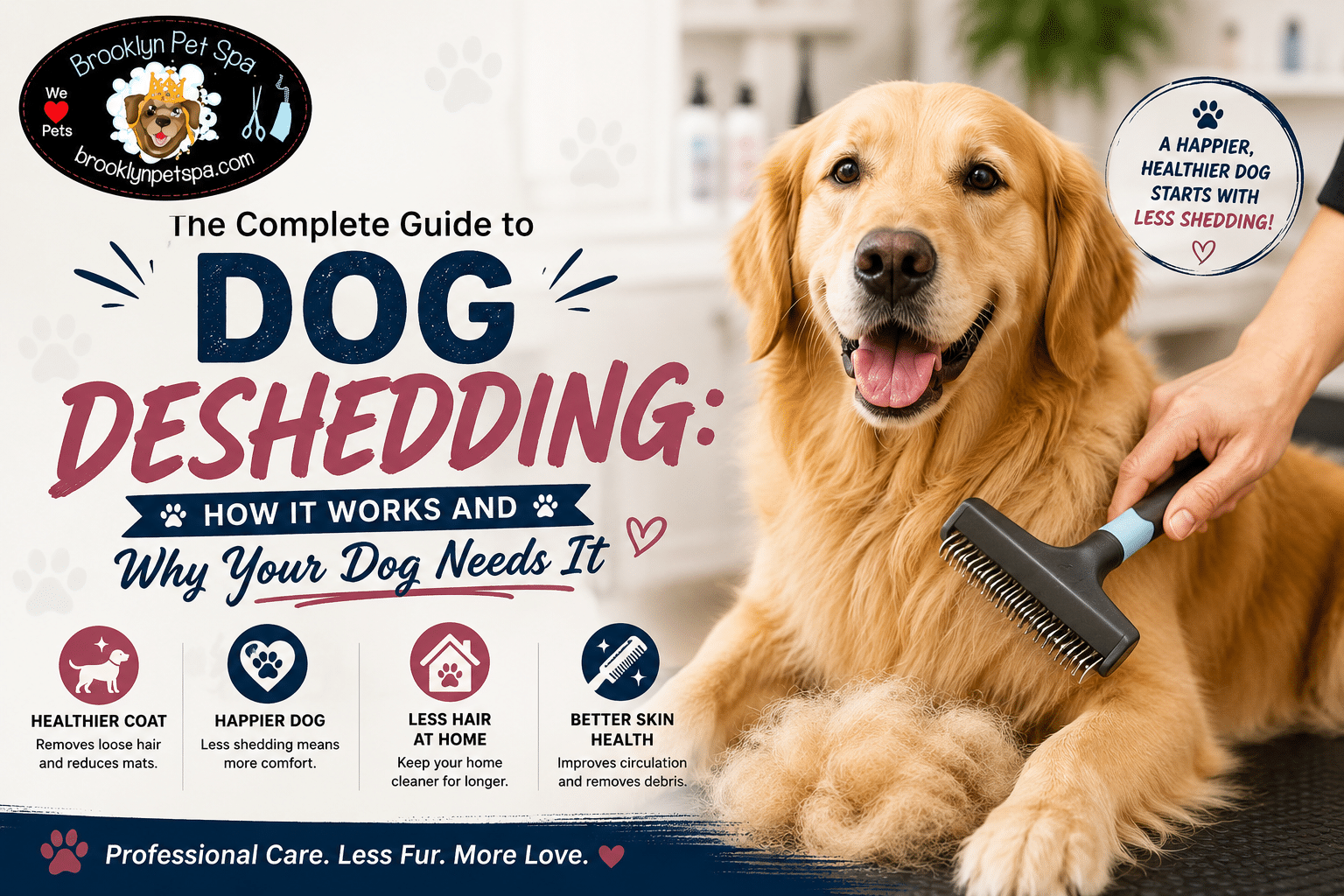
A typical professional Dog Deshedding Treatment session involves a few key steps: a deep cleansing bath with a shampoo formulated to loosen dead fur, a high-velocity dryer that blasts out loose hair while it’s still in the tub (which keeps the mess contained), and a thorough brush-out using tools like deshedding rakes or blades to lift out what’s left. Some groomers finish with a nourishing conditioner to restore natural oils and leave the coat soft and shiny.
How It’s Different From a Regular Bath or Brush
It’s easy to assume any bath will help with shedding, but a standard wash mostly cleans the topcoat. This process goes further by targeting the undercoat specifically, which is why the results last noticeably longer — often several weeks, compared to just a few days after a basic bath.
Which Dogs Benefit Most?
Double-coated breeds get the biggest results from this service, including:
- Golden Retrievers and Labrador Retrievers
- German Shepherds
- Siberian Huskies and Alaskan Malamutes
- Australian Shepherds and Border Collies
- Corgis and Pomeranians
That said, plenty of single-coated or short-haired breeds — like Beagles, Pit Bulls, and Hounds — can still build up loose undercoat and benefit from the occasional session. On the other hand, breeds without an undercoat at all, such as Poodles, Maltese, and Yorkshire Terriers, generally don’t need this specific service and are better served by routine brushing and trimming.
How Often Should You Book One?
This depends heavily on your dog’s coat and the season. As a general guideline:
- Heavy shedders (Huskies, Shepherds, Retrievers): every 4–8 weeks, more often during spring and fall shedding season
- Moderate shedders: roughly once every 2–3 months
- Light shedders: a few times a year is usually plenty
Spring and fall tend to be the busiest times for this service, since that’s when dogs naturally blow their winter or summer coat. If you notice your dog leaving noticeably more hair around the house, or you can easily pull loose tufts from their coat with your fingers, that’s a good sign it’s time to schedule one.
The Benefits Go Beyond a Cleaner Couch
While less fur on your furniture is the most obvious perk, a dog deshedding treatment offers real health benefits too:
- Healthier skin — removing trapped dead hair reduces the risk of matting, hot spots, and irritation
- Better temperature regulation — improved airflow to the skin helps dogs stay more comfortable in warm weather
- Fewer allergens at home — less loose fur floating around can be a genuine relief for allergy-prone family members
- Bonding time — regular grooming sessions, done gently, help dogs get more comfortable with handling and touch
A Quick Word on Shaving
It might be tempting to just shave a heavy shedder and be done with it, but this is one shortcut worth avoiding for double-coated dogs. The undercoat plays an important role in regulating body temperature and protecting skin from sunburn. Shaving it off doesn’t stop shedding — it can actually make the regrowth coarser or patchier, and in some cases the coat doesn’t grow back the same at all. A proper dog deshedding treatment session is a far safer way to manage excess fur.
DIY vs. Professional Deshedding
You can absolutely maintain some of the results at home with a quality deshedding brush or rake between appointments, especially for dogs with mild to moderate shedding. But for dense double coats or dogs that haven’t been deshedded in a while, booking a professional session is usually worth it. Groomers have access to higher-powered dryers and tools that reach the undercoat far more effectively than most at-home equipment, and they know how to work through a heavy coat without causing discomfort or skin irritation.
Frequently Asked Questions
Does the dog deshedding treatment process hurt my dog? No. When done correctly by an experienced groomer, it’s a gentle process. Dogs often find the brushing and warm air from the dryer relaxing.
Will it completely stop my dog from shedding? No treatment eliminates shedding entirely — it’s a natural process. What it does is remove the bulk of the loose, dead undercoat before it ends up on your floors and furniture, significantly cutting down on visible shedding for weeks at a time.
How long does a session take? Depending on your dog’s size and coat density, a full session can take anywhere from 45 minutes to a couple of hours.
Is it safe for puppies or senior dogs? Most groomers can adjust the process for puppies and senior dogs, but it’s always worth mentioning your dog’s age and any health concerns when booking.
If shedding season has taken over your home, a dog deshedding treatment is one of the most effective ways to get ahead of it. It’s safer than shaving, more thorough than a basic bath, and it comes with real benefits for your dog’s skin and coat health — not just a tidier living room. Talk to your groomer about your dog’s breed and coat type, and they can help you build a schedule that keeps shedding under control all year round.