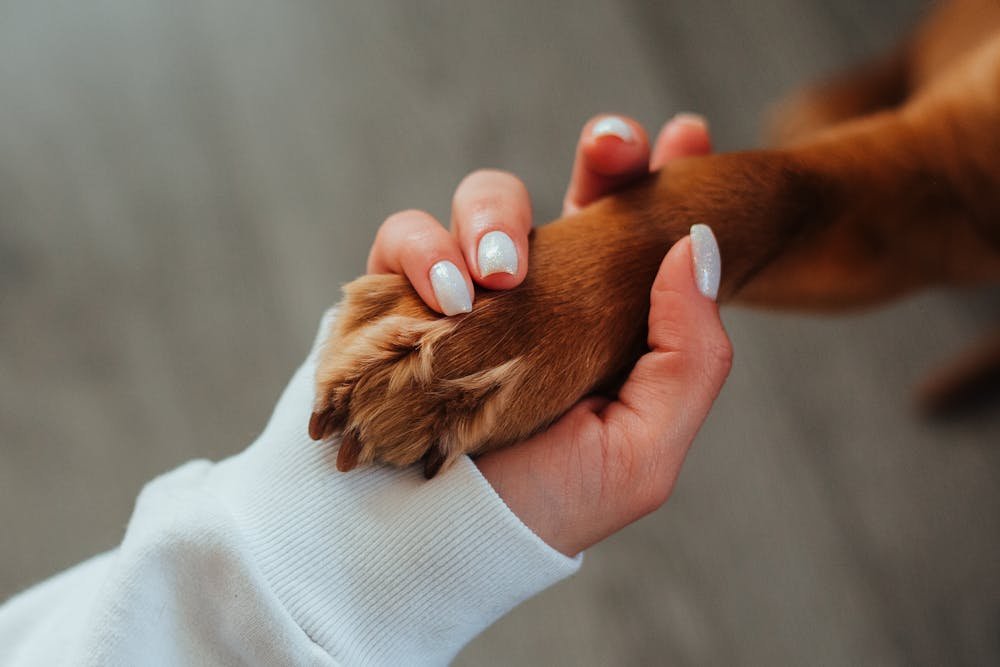
Walk into any grooming salon and you will find two tools on the nail care station: a pair of clippers and a rotary grinder. Both accomplish the same basic goal, shortening overgrown nails to a length that is comfortable and healthy for your dog. But the way they accomplish that goal, the experience they create for the dog, the finish they leave, and the situations in which each one works best are meaningfully different. If you have ever wondered which method is right for your dog, or why your groomer reaches for one over the other, this guide gives you the complete picture.
Nail care is one of the most overlooked aspects of dog health maintenance, yet it has a direct impact on how a dog moves, stands, and distributes weight across their joints. At Brooklyn Pet Spa, nail trimming is included as part of every grooming appointment because we understand how much it matters, not just for appearance but for your dog’s long-term physical wellbeing.
Why Nail Length Actually Matters
Before comparing methods, it helps to understand why keeping nails appropriately short is so important. When a dog’s nails grow too long, they make contact with the ground on every step. That contact creates an upward force on the nail and ultimately on the toe joints. Over time, this pressure alters the dog’s gait, pushing weight backward onto the wrist and causing compensatory stress on the ankles, knees, hips, and spine. For senior dogs or breeds already prone to joint problems, overgrown nails can accelerate discomfort significantly.
Long nails are also more likely to snag on carpet, crack under pressure, or curl back toward the paw pad, causing puncture wounds. Dogs who are reluctant to walk on hard floors, who slip frequently, or who carry their weight unevenly are often dealing with nail discomfort that the owner has not yet identified as the source of the problem. A thorough understanding of what can go wrong is covered in our guide to nail and nail bed disorders in dogs, which walks through the full range of nail-related health issues groomers and owners should watch for.
How Clipping Works
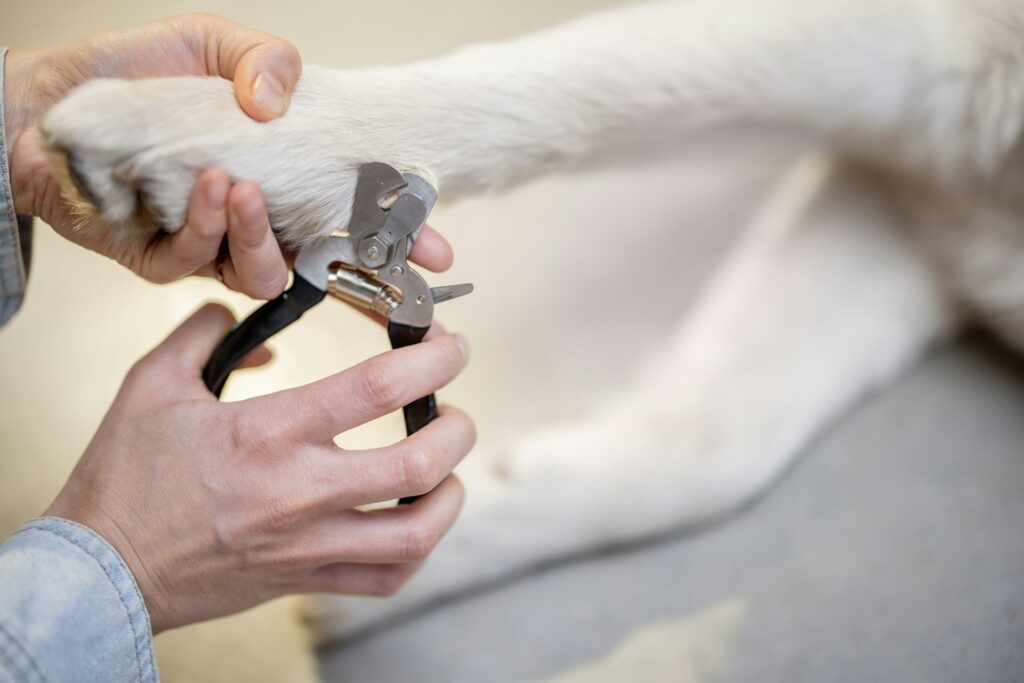
Nail clipping uses a sharp blade to cut straight through the nail in a single motion. There are two main types of clippers used in professional grooming: guillotine clippers, which use a fixed ring and a sliding blade, and scissor-style clippers, which work more like conventional scissors. Most professional groomers prefer scissor-style clippers for larger breeds because they provide more control and leverage.
The key challenge with clipping is the quick, which is the blood vessel and nerve bundle that runs through the center of every dog’s nail. On dogs with light-colored nails, the quick is usually visible as a pinkish streak. On dogs with dark or black nails, it is entirely invisible from the outside, which is why clipping dark nails requires experience, confidence, and careful incremental cuts rather than one aggressive pass.
Advantages of Clipping
- Fast, taking only seconds per nail in skilled hands
- Effective for all nail thicknesses including very thick, hard nails on large breeds
- Preferred for dogs who are anxious about vibration or noise
- Does not generate heat, which can be uncomfortable if the grinder contacts the nail for too long
Disadvantages of Clipping
- Leaves a sharp, beveled edge that can scratch floors and skin
- Higher risk of cutting the quick if technique is rushed or nails are dark
- The sound of the clip can startle noise-sensitive dogs
- Cannot get nails as short as grinding in a single session
How Grinding Works
Nail grinding uses a rotary tool fitted with a small sandpaper drum or stone bit to file the nail down gradually. The grinder moves in controlled passes across the nail tip, removing small amounts of material at a time. Because the removal is gradual and the groomer can see the nail surface clearly throughout the process, grinding allows for a closer, more precise finish than clipping typically achieves in one pass.
The finished nail after grinding is smooth and rounded, with no sharp edges. This is particularly appreciated by owners whose dogs jump up on people or sleep in the bed with them. It is also safer for dogs who are active on hard floors, since smooth nails grip surfaces more evenly than freshly clipped ones.
Advantages of Grinding
- Leaves a smooth, rounded nail with no sharp edges or rough spots
- Allows the groomer to get nails shorter more safely, especially on dark-nailed dogs
- Reduces the risk of quicking because the approach is gradual and visual
- Excellent for dogs with thick, overgrown, or ridged nails that are harder to clip cleanly
Disadvantages of Grinding
- Takes more time than clipping, particularly for dogs with many nails to address
- The vibration and hum of the grinder can be off-putting for some dogs, especially on a first introduction
- Heat buildup is possible if the grinder contacts the nail for too long without breaks
- Fine nail dust is produced during grinding, which some dogs find irritating near their nose
Which Method Is Better? The Honest Answer
The most accurate answer is that it depends on the individual dog, not a fixed preference. Most experienced groomers use both methods and choose based on what they observe during the appointment.
For a dog with light, thin nails who is comfortable with handling and shows no anxiety around tools, clipping is fast, effective, and entirely appropriate. For a dog with thick black nails, a history of having been quicked, or a coat type that makes handling the paw difficult, grinding gives the groomer significantly more control and produces a better result. Many groomers clip first to remove the bulk of the nail length and then finish with the grinder to smooth the edges and get slightly closer without risking the quick. This combined approach delivers the speed of clipping with the precision and smooth finish of grinding.
The dog’s temperament is equally important. Some dogs are relaxed about clippers but tense the moment the grinder touches their nail. Others are comfortable with grinding but pull back from the sound of a clipper. A skilled groomer reads the dog’s body language throughout and adjusts accordingly. This is one reason why consistent appointments with the same groomer produce better nail outcomes over time. The groomer gets to know your dog’s preferences and builds on that trust incrementally. Our experienced grooming team works with hundreds of breeds and temperaments and brings that accumulated knowledge to every nail care session.
The Role of Frequency in Nail Health
Whichever method is used, frequency matters enormously. Dogs whose nails are trimmed consistently, every three to four weeks, have quicks that gradually recede as the nail shortens over successive appointments. Dogs who go months between trims arrive with long nails and an equally long quick that sits far out into the nail, making it impossible to get them truly short in a single session without risking a cut. Over time, consistent trimming literally changes the nail structure in a positive direction.
This is why integrating nail care into a regular professional grooming services schedule is the most effective long-term strategy. Dogs who come in every four to six weeks for grooming leave with progressively better nails because each appointment builds on the last. Those who come in once or twice a year face a constant reset where the nails have grown too long to address properly in a single visit.
Between professional appointments, walking your dog regularly on concrete or asphalt naturally files the front nails to some degree. This does not replace professional trimming but it slows the rate of regrowth in active dogs. The rear nails, which touch the ground less during a normal stride, almost always need more frequent trimming than the front ones. Checking all four paws monthly at home is a good habit regardless of your grooming schedule.
What to Expect at a Nail Appointment at Brooklyn Pet Spa
At every appointment, whether it is a standalone nail trim or part of a full professional bathing appointment, our team examines the nails before deciding on the appropriate approach. We note the nail color, thickness, length, and the dog’s body language during handling. For dogs with a history of nail anxiety, we take extra time with introductions and desensitization before beginning. We never rush the process to save time at the expense of your dog’s comfort.
If a dog is experiencing significant nail-related anxiety, we sometimes recommend splitting the nail care across two shorter sessions rather than forcing the dog through a single stressful experience. Dogs who visit us regularly for dog daycare tend to have lower baseline anxiety during grooming appointments simply because the environment is familiar and associated with positive experiences. Familiarity is one of the most underrated tools in managing a nervous dog’s grooming experience.
Check our dog grooming rates for current nail trim pricing across breeds, and read what our clients say about their experience with us. If you are based in Park Slope or anywhere in the surrounding area, we are conveniently located at 317 Flatbush Ave and easy to reach on foot or by transit.
Frequently Asked Questions
My dog has black nails and has been quicked before. Should we use grinding instead of clipping?
Grinding is often the better choice for dogs with dark nails and a history of being quicked because the gradual approach makes it easier to see the nail structure and stop before reaching the quick. That said, a skilled groomer can clip dark nails safely using small incremental cuts. Let us know about your dog’s history when you book and we will choose the right approach for them.
How do I know if my dog’s nails are too long?
The clearest sign is audible clicking on hard floors. If you can hear your dog’s nails when they walk, they are already overdue for a trim. Ideally, the nails should just clear the floor without making contact during a relaxed standing posture. You should also check the dewclaws, which are located further up the leg and do not contact the ground at all, since these can grow into a curl without any visible wear.
Can I use a grinder at home between professional appointments?
Yes, with patience and the right introduction. Start by letting your dog sniff and investigate the grinder while it is off, then turn it on near them without touching their nails, and gradually work up to contact over several sessions. Use very short contact time and take breaks. Home grinding works well as a maintenance tool between professional appointments, particularly for dogs who are already comfortable with the process from their grooming visits.
How often should I get my dog’s nails trimmed?
Most dogs need nail attention every three to four weeks. Active dogs who walk frequently on pavement may need slightly less frequent trims on the front nails. Rear nails almost always need more frequent attention. Senior dogs with slower activity levels often need more frequent trimming than younger, more active dogs. A consistent schedule prevents the quick from lengthening and makes every appointment easier than the last.
What if my dog absolutely refuses to have their nails done?
Extreme nail anxiety is more common than most owners realize and it is almost always addressable through gradual desensitization and positive association. We never restrain a dog aggressively to force a nail trim. Instead, we work incrementally over multiple visits, building comfort with each session. In very extreme cases where a dog cannot be handled safely without risk of injury to themselves or the groomer, veterinary sedation for nail trims is a legitimate and humane option worth discussing with your vet.
Give Your Dog Nails They Will Thank You For
Professional nail care. Zero shortcuts. Every visit.
Whether your dog needs clipping, grinding, or a combination of both, our experienced team chooses the right approach for your individual dog every single time. We include nail trims in every full grooming and bathing package, and offer standalone nail appointments for dogs who just need a quick trim.
Brooklyn Pet Spa has been trusted by Brooklyn pet owners since 2008, rated 4.6 stars across hundreds of reviews.
Book Your Appointment Now317 Flatbush Ave, Brooklyn, NY 11217 · 718-768-0293
Mon to Sat 7:30 AM to 7:30 PM · Sunday 7:30 AM to 6:30 PM