There are few things more distressing for a dog owner than watching their pet scratch, chew, lick, and rub relentlessly without any obvious explanation. You have checked for fleas. You have switched food brands. You have tried every home remedy you can find. And yet the itching continues. In many cases, the culprit is an allergy, and the management strategy that makes the biggest consistent difference is also one of the most underestimated: regular, properly executed bathing.
This article breaks down what dog allergies actually look like, how to tell them apart from other skin issues, and why the right professional bathing routine can be one of the most effective tools in keeping your allergic dog comfortable.
What Does an Allergic Reaction Actually Look Like in Dogs?
Dogs do not sneeze and get watery eyes the way humans typically do when allergies strike. Their reactions tend to show up in the skin, the ears, and the paws. If you are seeing any of the following, allergies are worth investigating seriously.
- Persistent scratching, particularly around the face, armpits, belly, and groin
- Red, inflamed, or visibly irritated skin patches
- Recurring ear infections or a dog that frequently shakes its head and paws at its ears
- Paw licking or chewing intense enough to turn the fur between the toes a rust or brown color
- Hot spots, which are raw, moist, circular patches of irritated skin that appear suddenly
- Flaky, dry, or greasy skin with an unusual odor
- Chronic gastrointestinal issues like loose stools or gas, which can accompany food allergies
The tricky part is that several of these symptoms overlap with other conditions, including parasites, fungal infections, and bacterial skin infections. A veterinary diagnosis is always the right first step. Once allergies are confirmed, the management plan usually involves a combination of medical treatment and a consistent grooming and bathing protocol.
The Three Main Types of Dog Allergies
Environmental Allergies (Atopy)
Environmental allergies, also called atopic dermatitis or atopy, are triggered by airborne substances in your dog’s surroundings. Pollen, mold spores, dust mites, and grass are among the most common culprits. These allergies tend to be seasonal at first and become year-round as the dog ages and accumulates more exposure. Dogs with atopy absorb environmental allergens through the skin as well as through inhalation, which is why keeping allergen load on the coat and skin surface low through regular bathing genuinely helps.
In a city like Brooklyn, environmental allergen exposure is constant. Sidewalks, parks, and green spaces expose dogs to pollen and mold during every walk. Dust accumulates in apartments. The urban environment is not a low-allergen environment by any measure, which is one reason city dogs often benefit from more frequent bathing than their suburban counterparts.
Food Allergies
Food allergies develop when a dog’s immune system mounts a response to a protein it has been exposed to repeatedly over time. Beef, chicken, dairy, wheat, eggs, and soy are the most frequently identified triggers. Contrary to what many owners assume, food allergies do not typically appear in the first year of life. They tend to develop after extended exposure, often in dogs between one and five years old who have been eating the same diet for a long time.
The gold-standard way to identify a food allergy is an elimination diet trial, which involves feeding a novel protein and carbohydrate source for eight to twelve weeks under veterinary supervision. Bathing alone will not resolve a food allergy, but the skin inflammation it causes is still managed more effectively when bathing is part of a broader care routine.
Contact Allergies
Contact allergies are localized reactions to something the dog has physically touched. Grasses, cleaning products used on floors, certain fabrics, plastic food bowls, and specific grooming products can all trigger contact reactions. The irritation typically appears on the areas most directly exposed, including the paws, belly, and muzzle. Switching to fragrance-free, hypoallergenic grooming products is often part of managing this type of allergy, which is something our team takes seriously when selecting products for dogs with known sensitivities.
Why Bathing Matters More Than Most People Realize
For dogs with environmental and contact allergies especially, regular bathing with the right products does something no medication alone can accomplish: it physically removes allergens from the coat and skin surface before they can be absorbed or trigger a reaction. Think of it as reducing the daily allergen burden your dog’s immune system has to respond to.
Research in veterinary dermatology has consistently supported bathing frequency as a meaningful intervention for atopic dogs. The general recommendation from veterinary dermatologists is bathing every one to two weeks during high-allergen periods for dogs with confirmed environmental allergies. That is significantly more frequent than the average owner realizes, and it makes a real difference to symptom severity over time.
The key variables are the products used and the technique applied. A harsh shampoo used too frequently can strip the skin’s natural oils and worsen the very barrier dysfunction that makes allergic dogs more vulnerable to irritants in the first place. This is exactly why the product selection at a professional grooming facility matters for allergic dogs far more than it does for healthy-coated ones.
What to Look for in a Shampoo for Allergic Dogs
Not all pet shampoos are created equal, and the difference matters significantly for dogs with compromised skin barriers. When choosing a shampoo for an allergic dog, the priorities are:
- Fragrance-free or very lightly scented, since artificial fragrances are a common contact irritant
- Hypoallergenic formulas with gentle, non-stripping cleansing agents
- Oatmeal or aloe-based formulas that soothe inflammation while cleaning
- Medicated options containing chlorhexidine or miconazole for dogs who also have secondary bacterial or yeast infections alongside their allergies
- Ceramide or fatty acid-enriched formulas that help restore and reinforce the skin barrier
At Brooklyn Pet Spa, we use professional-grade HYDRA products selected for their quality and gentleness. For dogs with known allergies or sensitive skin, we discuss product selection before every bath and adjust based on what the dog’s coat and skin are telling us that day. If you have a veterinary recommendation for a specific medicated shampoo, we can work with that too.
The Role of Professional Bathing in a Long-Term Allergy Management Plan
Managing a dog’s allergies is a long-term commitment, not a one-time fix. Most dogs with atopy require a combination of veterinary treatment, dietary management where relevant, environmental controls at home, and regular grooming. The grooming piece is the one owners most consistently underinvest in, often because the connection between bathing frequency and symptom control is not as obvious as taking a pill or applying a topical medication.
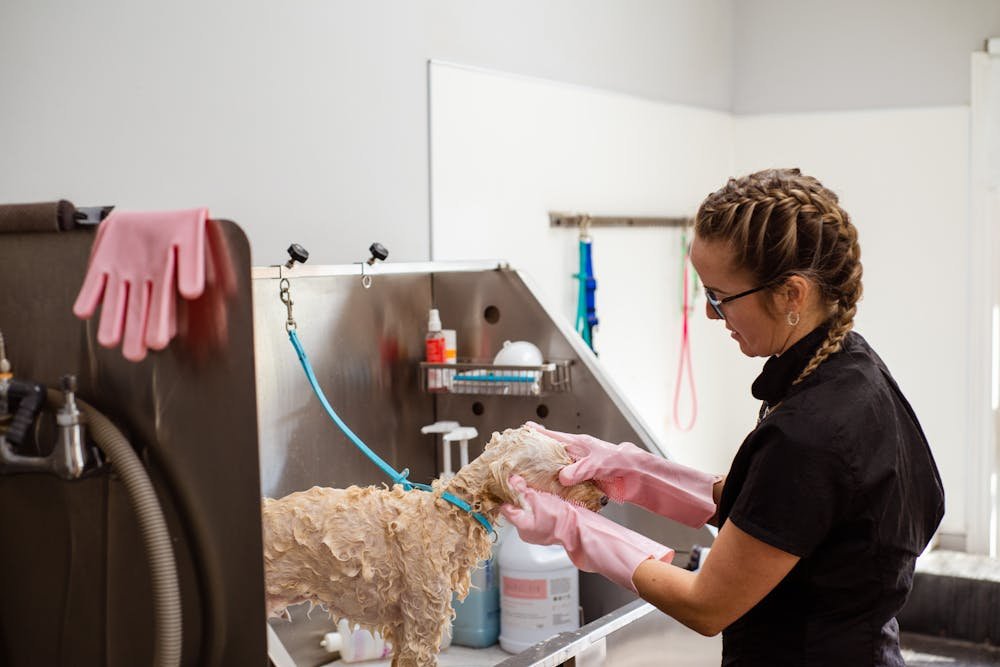
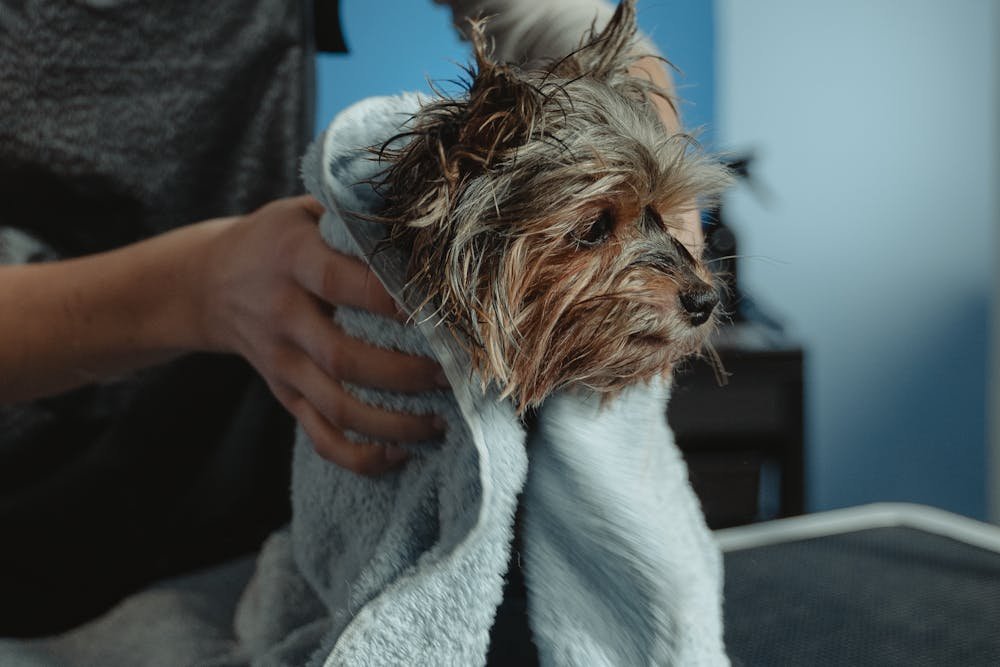
Our professional bathing service goes beyond what most owners can replicate at home. We use high-velocity drying that removes loose hair, dead skin cells, and allergen particles more effectively than towel drying. We check the ears, paws, and skin folds during every bath, which means we often catch secondary infections or new irritation points before they escalate into something requiring veterinary intervention. Groomers with over 20 years of experience handle every dog, and they know what healthy skin looks like versus skin that needs attention.For dogs who need grooming alongside bathing, our full grooming service includes breed-appropriate trimming that also reduces allergen accumulation in long coats. Keeping fur short between the paws, around the ears, and on the belly reduces the surface area available for allergen collection during outdoor time.
What You Can Do Between Professional Baths
Professional bathing works best when it is supported by a consistent home routine. Between appointments, there are meaningful things you can do to reduce allergen exposure and keep your dog more comfortable.
- Wipe down your dog’s paws, belly, and face with a damp cloth or pet-safe wipe after every walk, especially during high-pollen seasons
- Wash your dog’s bedding weekly using fragrance-free detergent to reduce dust mite and allergen accumulation
- Vacuum floors and soft furnishings regularly, since allergens settle in carpet fibers and upholstery
- Keep windows closed during high-pollen days and rely on air conditioning rather than open ventilation
- Brush your dog several times a week to remove allergen-carrying loose hair before it settles in the coat
- Keep omega-3 fatty acid supplementation consistent if your vet has recommended it, since these support skin barrier function over time
Frequently Asked Questions
How often should I bathe my dog if they have environmental allergies?
Veterinary dermatologists generally recommend bathing allergic dogs every one to two weeks during high-allergen periods. Year-round, once every two to three weeks is a reasonable baseline for most atopic dogs. Your vet can provide guidance based on your dog’s specific triggers and severity.
Will bathing make my dog’s skin drier and worse?
Bathing with the wrong products too frequently can strip natural oils and cause dryness. However, using the right products at the correct frequency can help remove irritants, reduce inflammation, and support the skin barrier. Professional grooming with quality formulations is typically more effective than frequent home washing.
My dog has a food allergy. Will bathing help?
Bathing will not address the root cause of a food allergy, but it can help manage skin symptoms. Soothing treatments like oatmeal or ceramide-based baths can reduce irritation and improve comfort when combined with a vet-directed diet plan.
Can I bring my own medicated shampoo to the grooming appointment?
Yes. If your veterinarian has prescribed a specific medicated shampoo, you can bring it to your appointment. Groomers can follow the recommended contact time to ensure the treatment works as intended.
Are certain breeds more prone to skin allergies than others?
Yes. Breeds such as French Bulldogs, English Bulldogs, West Highland White Terriers, Golden Retrievers, Labrador Retrievers, German Shepherds, Cocker Spaniels, and Shih Tzus are more commonly affected by skin allergies. Proactive skin and coat care is especially important for these breeds.
Book a Soothing Bath for Your Itchy Dog
Our professional bathing team uses premium, pet-safe HYDRA products and over 20 years of experience to give allergic dogs real, lasting relief. We work with sensitive skin every day.
See our full list of breed-specific grooming services for more information.
Schedule a bathing appointment and let us take it from there.
317 Flatbush Ave, Brooklyn, NY 11217 | 718-768-0293
Mon to Sat 7:30 AM to 7:30 PM | Sunday 7:30 AM to 6:30 PM